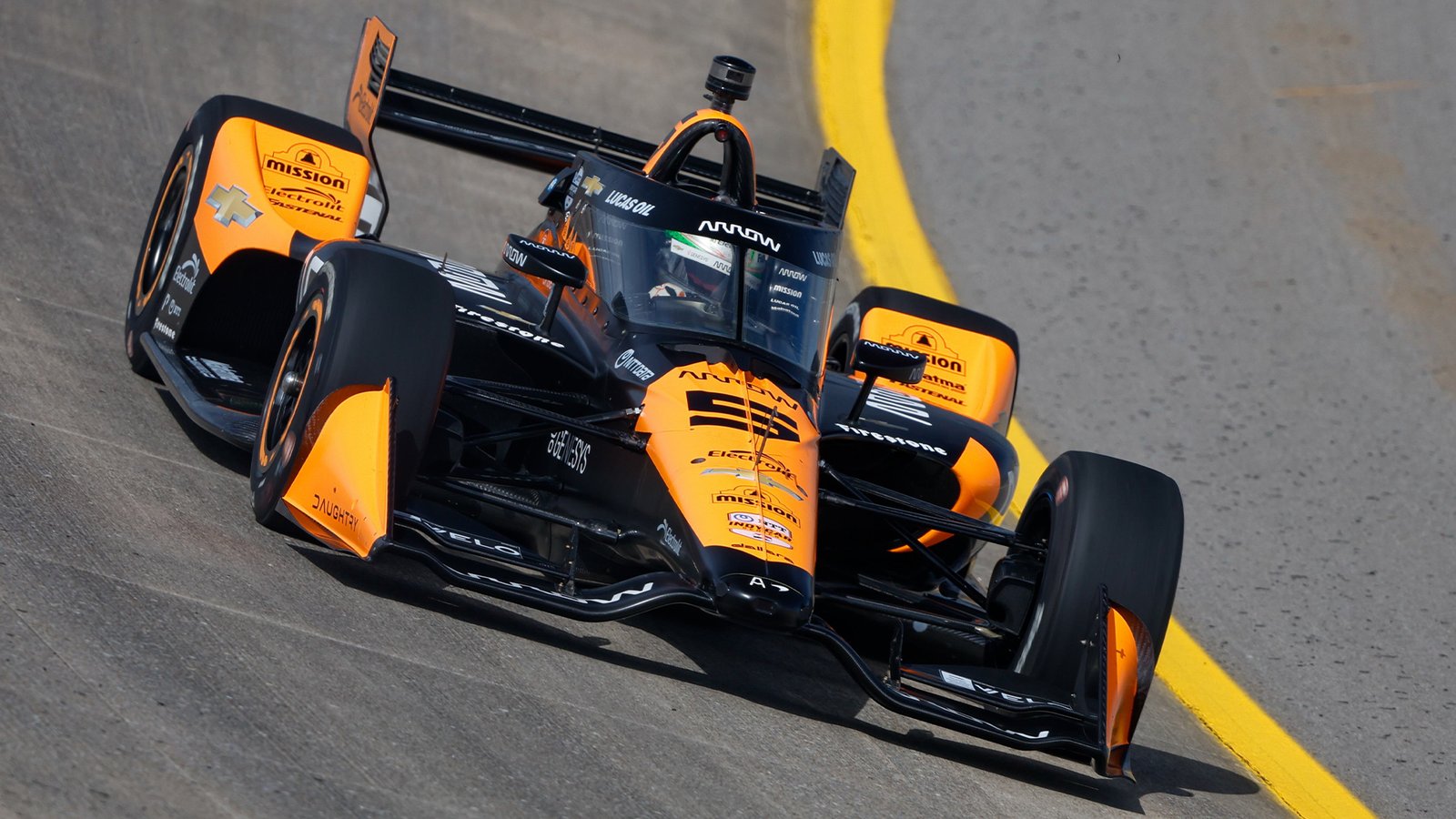
IndyCar has always been a championship built around speed, close racing, and engineering.
But the technology underneath the cars is changing.
The series has entered its hybrid era, introducing a new system designed to add another layer of performance without taking away the high-speed, wheel-to-wheel racing that defines American open-wheel competition.
Unlike some racing series that have completely transformed their powertrains, IndyCar has taken a more conservative approach.
The internal-combustion engine is still at the center of the car.
The difference is that drivers now have additional electrical power available when they need it.
And that is changing the way races are fought.
IndyCar’s Hybrid Era Has Officially Begun
IndyCar introduced its hybrid power system as part of a major technical evolution for the championship.
The system was developed in partnership with Honda and Chevrolet, the two engine manufacturers currently competing in the series.
The hybrid unit combines energy recovery with a supercapacitor-based electrical storage system.
Instead of relying exclusively on a traditional battery system, IndyCar’s hybrid technology uses supercapacitors capable of charging and discharging energy extremely quickly.
That makes the system particularly suited to motorsport.
During braking and other energy-recovery opportunities, the system can capture energy that would otherwise be lost.
That energy can then be used to provide additional power.
More Power Changes Race Strategy
The most obvious benefit of hybrid technology is additional performance.
But the system also creates new strategic possibilities.
Drivers and teams now have to think about when and where to use their available electrical energy.
Deploying additional power can help during an overtaking attempt.
It can be used to defend against another driver.
It may also play a role in recovering after a slow corner or maximizing acceleration.
That creates another layer of decision-making.
In traditional racing, a driver’s strategy might focus primarily on tires, fuel, and track position.
With hybrid technology, energy management becomes another important factor.
The driver is no longer simply managing the mechanical performance of the car.
They are also managing electrical energy.
Why IndyCar Chose Supercapacitors
One of the most interesting technical decisions behind the system is the use of supercapacitors.
Unlike conventional batteries, supercapacitors can accept and release large amounts of energy extremely quickly.
That makes them useful in a racing environment where rapid energy recovery and deployment are essential.
IndyCar’s hybrid system was designed to provide a compact and lightweight solution while handling the extreme demands of high-performance competition.
The technology also introduces additional redundancy and starting capabilities.
In certain situations, the hybrid system can help restart the car without requiring external assistance.
That could reduce delays after a spin or stall and potentially keep more cars in competition.
The Hybrid System Doesn’t Replace the Engine
For traditional motorsport fans, one of the most important details is that IndyCar has not abandoned internal-combustion power.
The series continues to use 2.2-liter twin-turbocharged V6 engines supplied by Honda and Chevrolet.
The hybrid system works alongside the combustion engine rather than replacing it.
That allows IndyCar to add modern technology while preserving the sound, speed, and character of the cars.
On road courses and street circuits, IndyCars already produce extraordinary performance.
At the Indianapolis 500, the cars operate in one of the most demanding high-speed environments in motorsport.
Adding hybrid technology without significantly compromising reliability has therefore been a major engineering challenge.
The System Is Also Changing How Teams Prepare
A hybrid race car is more complicated than a traditional combustion-powered machine.
Teams now need to monitor additional electrical components, energy deployment, cooling requirements, and software systems.
That creates new responsibilities for engineers and mechanics.
The introduction of hybrid technology also increases the importance of data.
Teams can analyze when drivers recover energy.
They can study how efficiently the system is being deployed.
And they can compare different strategies across an entire race distance.
The result is another layer of engineering competition.
A team may not simply win because it has the fastest driver or the best aerodynamic setup.
The way it manages energy could also influence the final result.
Hybrid Technology Could Make Racing More Competitive
IndyCar is already known for close competition.
The series uses a relatively controlled technical formula compared with Formula 1, which helps prevent one manufacturer or team from developing an overwhelming technological advantage.
The hybrid system was introduced with the goal of adding performance without destroying that balance.
Because both Honda and Chevrolet use the same fundamental hybrid architecture, the focus remains on how teams integrate the technology into their overall race strategy.
That could create more opportunities for overtaking and defensive driving.
The timing of energy deployment may become as important as the timing of a push-to-pass activation.
And in a championship where races are often decided by fractions of a second, even a small advantage can make a difference.
What Hybrid Racing Means for the Automotive Industry
Motorsport has often been used as a testing ground for technology.
Manufacturers compete because racing provides an opportunity to develop engineering knowledge under extreme conditions.
The hybrid era could help Honda and Chevrolet gain experience with electrical systems, energy recovery, cooling, and software integration.
Of course, an IndyCar hybrid system is not the same as the powertrain found in a production hybrid vehicle.
But the underlying engineering challenges can still generate valuable knowledge.
Managing electrical energy at high power levels is becoming increasingly important across the automotive industry.
Bringing Motorsport Technology Closer to Home
The idea of using technology to improve performance is not limited to professional racing.
Modern enthusiast cars increasingly rely on electronic systems to manage engine performance, traction, braking, and other aspects of driving.
Even relatively simple modifications can now involve electronic components and diagnostic tools.
For enthusiasts interested in understanding how their own car’s electronic systems work, an OBD-II scanner can be a useful tool for reading diagnostic information and monitoring certain vehicle data.

- OBD2 SCANNER FOR ALL SYSTEMS – The INNOVA SD35 is a tablet-based OBD2 scanner designed for advanced diagnostics. Read an…
- ALL-SYSTEM DIAGNOSTICS & LIVE DATA – Unlike basic code readers, this OBD2 scanner for all vehicles scans engine, transmi…
- OBD2 TABLET WITH USER-FRIENDLY INTERFACE – This automotive scan tool features a high-resolution display, making vehicle …
Before purchasing, make sure the scanner supports your specific vehicle and the features you want to access.
The Next Step for IndyCar
The current hybrid system is likely only the beginning.
As automotive technology continues to evolve, IndyCar will eventually face decisions about what comes next.
Could the series introduce more powerful electrical systems?
Could future cars use alternative fuels?
Could new manufacturers enter the championship?
Those questions remain open.
For now, IndyCar appears to have found a middle ground.
The series is modernizing without completely reinventing itself.
The cars are still loud.
They are still extremely fast.
And drivers are still fighting wheel-to-wheel at some of the most famous circuits in the world.
Racing Is Evolving — Not Disappearing
The introduction of hybrid technology has generated debate among motorsport fans.
Some enthusiasts worry that electrification could eventually remove the characteristics that make racing exciting.
Others see new technology as an opportunity to create more complex and interesting competition.
IndyCar’s approach suggests that both ideas can coexist.
The hybrid system adds a new technical dimension without replacing the internal-combustion engine.
Drivers still need bravery.
Teams still need mechanical reliability.
And races are still decided by strategy, overtaking, and execution.
The technology underneath the car may be changing.
But the objective remains exactly the same:
Cross the finish line first.
As IndyCar continues to develop its hybrid era, one thing is clear.
The future of American open-wheel racing will involve more technology.
But it does not have to involve less racing.