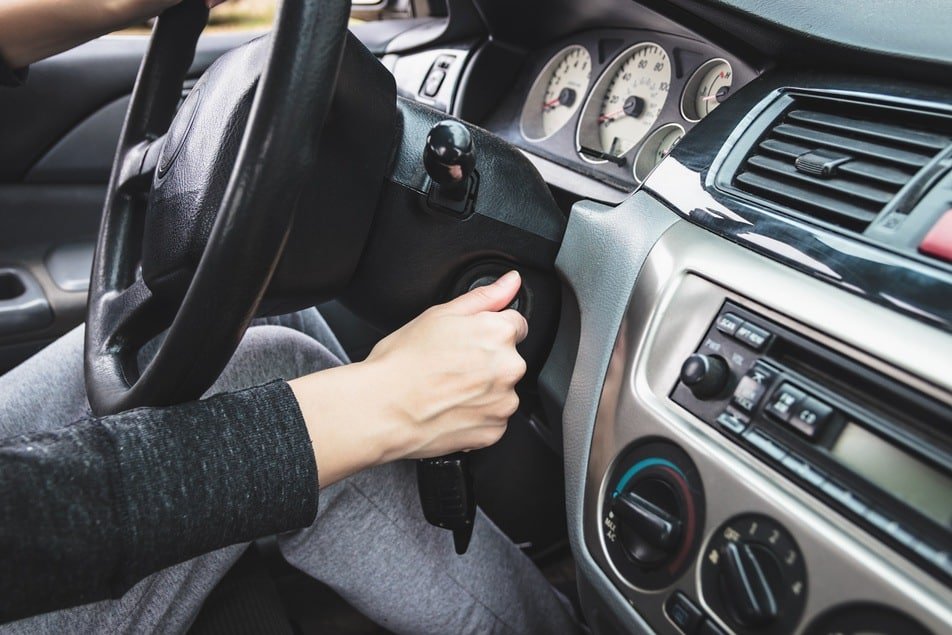
Few car problems are more frustrating than turning the key—or pressing the start button—and getting nothing.
A car that will not start can be caused by something as simple as a weak battery or as complex as a failed fuel, ignition, or engine-management component.
The good news is that you can often narrow down the problem by paying attention to what happens when you try to start the car.
This guide walks through the most common scenarios and explains what to check before replacing parts.
Important: If you smell fuel, see smoke, notice damaged wiring, or suspect a fuel leak, stop and have the vehicle inspected by a qualified technician.
Step 1: Does the Engine Crank?
This is the first question to answer.
When you try to start the car, the engine will generally fall into one of three categories:
1. Nothing happens
You turn the key or press the start button, but the engine does not crank.
2. You hear clicking
You may hear one click or repeated rapid clicking sounds.
3. The engine cranks but does not start
The starter motor turns the engine, but the engine never actually begins running.
Each situation points toward a different group of possible problems.
Scenario 1: Nothing Happens When You Try to Start the Car
If the engine does not crank at all, start with the electrical system.
Check the Battery
A weak or discharged battery is one of the most common reasons a car will not start.
Look for symptoms such as:
- Dim headlights
- Dashboard lights that flicker
- Slow or weak electrical accessories
- No response when turning the key
- A clicking sound when attempting to start
If you have a multimeter, you can check battery voltage.
A fully charged 12-volt lead-acid battery will typically measure around 12.6 volts with the engine off. A reading significantly below that may indicate a low state of charge.
However, voltage alone does not prove that the battery is healthy. A battery can show acceptable resting voltage and still fail under the heavy load created by the starter motor.
Check the Battery Terminals
Open the hood and inspect the battery connections.
Look for:
- Loose terminals
- Corrosion
- Damaged cables
- Broken terminal clamps
A poor connection can prevent enough current from reaching the starter even if the battery itself is fully charged.
Make sure the ignition is off before touching the battery connections.
Scenario 2: You Hear Rapid Clicking
Rapid clicking usually points toward a battery or electrical supply problem.
The starter solenoid may be attempting to engage, but the battery does not have enough available current to turn the starter motor.
Before replacing the battery, try to confirm the condition of the charging system and battery.
If the vehicle starts with a jump but repeatedly develops the same problem, the issue could involve:
- An aging battery
- A charging-system problem
- Parasitic electrical draw
- Corroded battery connections
A portable jump starter can also be useful for determining whether a low battery is preventing the vehicle from starting. If the car starts immediately after being jump-started, the battery or charging system should be investigated further.
👉 [Check a compatible portable jump starter on Amazon →](INSERT YOUR AMAZON AFFILIATE LINK HERE)
Remember: successfully jump-starting the car does not automatically mean the battery is the only problem.
Scenario 3: One Solid Click but the Engine Does Not Crank
A single solid click can indicate that the starter solenoid is engaging but the starter motor is not turning.
Possible causes include:
- A weak battery
- High resistance in the battery cables
- Poor ground connection
- A faulty starter motor
- A seized engine
Start with the simplest checks.
Inspect the battery terminals and ground connections.
If possible, test the battery under load.
A voltage-drop test across the positive and ground cables can help identify excessive resistance.
If the electrical system appears healthy but the starter still will not crank, the starter circuit may require further testing.
Scenario 4: The Engine Cranks but Will Not Start
If the engine is cranking normally, the battery and starter motor are probably doing their job.
The problem may now involve one of three basic areas:
- Fuel
- Spark
- Air/engine management
Modern engines also depend heavily on sensors and electronic control systems.
A fault involving a crankshaft position sensor, camshaft position sensor, ignition system, fuel injection system, or other critical component can prevent the engine from starting.
This is where diagnostic data can become extremely useful.
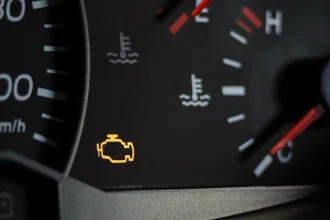
Check for Warning Lights
Before repeatedly trying to start the engine, look at the dashboard.
Was the Check Engine Light already on before the problem started?
Did any other warning lights appear?
Those clues may help narrow down the problem.
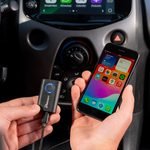
Use an OBD-II Scanner
For most vehicles sold in the United States since 1996, an OBD-II scanner can read diagnostic trouble codes stored by the vehicle’s computer.
A scanner may reveal faults related to:
- Crankshaft position sensors
- Camshaft position sensors
- Ignition misfires
- Fuel-system problems
- Sensor circuits
- Immobilizer-related faults on some vehicles
If your engine cranks but will not start, checking for stored diagnostic trouble codes can be one of the fastest ways to avoid replacing parts based purely on guesswork.

- [All System Diagnostics, Professional-Level Scanner] – BLCKTEC 460T is the ultimate OBD2 diagnostic tool for home mechan…
- [12+ Most Popular Reset Functions] – BLCKTEC 460T OBD2 scanner offers 12+ dealer-level service functions, including Oil …
- [Real-Time OBD2 and OEM Live Data, Freeze Frame Data] – BLCKTEC 460T helps diagnose vehicle issues when warning lights l…
Keep in mind that a trouble code does not always mean the named component itself has failed. A code is a diagnostic clue, and wiring, connectors, power supply, ground, or mechanical problems can sometimes produce similar codes.
Check the Fuel System
If the engine cranks but does not start, a lack of fuel is one possibility.
Depending on the vehicle, you may be able to hear the fuel pump briefly prime when the ignition is switched on.
However, hearing the pump does not guarantee that it is producing the correct fuel pressure.
Potential fuel-related problems include:
- Failed fuel pump
- Blown fuel-pump fuse
- Faulty relay
- Low fuel pressure
- Clogged fuel filter on serviceable systems
- Faulty fuel injectors
Testing fuel pressure requires the correct equipment and procedures for your specific vehicle.
Avoid disconnecting fuel lines without understanding the system, as modern fuel systems may operate under significant pressure.
Check the Ignition System
An engine also needs ignition at the correct time.
Possible problems include:
- Failed ignition coils
- Worn or damaged spark plugs
- Damaged ignition wiring
- Crankshaft position sensor failure
- Camshaft position sensor failure
A no-start condition caused by an ignition problem may sometimes be accompanied by misfires, rough running, or difficult starting before the engine finally refuses to start.
Do Not Forget the Immobilizer
Modern vehicles may prevent the engine from starting if the immobilizer system does not recognize the key or key fob.
Possible signs include:
- A security or key warning light
- The engine starting briefly and immediately shutting off
- A no-start condition with otherwise normal electrical operation
If you recently changed the key fob battery, damaged the key, or experienced problems with the vehicle’s security system, the immobilizer should be considered.
A Simple Diagnostic Order
Instead of replacing parts randomly, follow a logical sequence:
1. Check whether the engine cranks
This immediately separates many electrical and mechanical problems from fuel and ignition problems.
2. Inspect the battery and connections
Check voltage, terminal condition, and cable connections.
3. Listen to the sound
Rapid clicking, one solid click, slow cranking, and normal cranking can point toward different areas.
4. Check fuses and obvious wiring problems
Look for damaged cables, loose connectors, or blown fuses related to the starting and fuel systems.
5. Scan for diagnostic trouble codes
Stored codes may provide useful clues before more invasive testing.
6. Test the affected system
Depending on the symptoms, this may include testing:
- Battery
- Alternator
- Starter
- Fuel pressure
- Spark
- Sensor signals
Common Mistakes to Avoid
Replacing the Battery Without Testing It
A dead battery can be the symptom rather than the cause.
For example, a failing alternator may not recharge the battery correctly.
A parasitic draw can slowly drain it while the car is parked.
Replacing a Part Because of a Trouble Code
A code can identify a circuit or operating condition.
It does not always prove that the sensor or component itself is defective.
Always inspect the wiring, connectors, power supply, and ground before condemning an expensive component.
Repeatedly Cranking the Engine
Continuously attempting to start a vehicle can overheat the starter motor and drain the battery.
If the engine does not start after several attempts, stop and begin diagnosing the problem.
The Bottom Line
When your car will not start, the most important step is identifying which type of no-start condition you have.
- Nothing happens: Start with the battery, connections, starter circuit, and safety/immobilizer systems.
- Rapid clicking: Check the battery and electrical connections.
- One click: Investigate the battery, cables, ground, and starter motor.
- Engine cranks normally but will not start: Check for fuel, ignition, sensor, or engine-management problems.
The key is to diagnose before buying parts.
A basic multimeter, a portable jump starter, and an OBD-II scanner can help eliminate a significant amount of guesswork and may save you from replacing components that were never actually faulty.
Start with the symptom, test the system, and only then decide what needs to be repaired.