When people think about modifying a car, the first thing that usually comes to mind is horsepower.
A bigger turbocharger.
A supercharger.
An aggressive ECU tune.
But Porsche’s latest Nürburgring achievement is a reminder that making a car faster is not always about producing more power.
Sometimes, the biggest gains come from changing the way the car moves through the air.
The Porsche Taycan Turbo GT equipped with the Manthey Kit recently set an impressive lap time at the Nürburgring, completing the famous Nordschleife in 6 minutes and 55.553 seconds.
The achievement demonstrates just how dramatically aerodynamic modifications can affect a high-performance vehicle when they are designed as part of a complete package. (caranddriver.com)
More Aero Doesn’t Automatically Mean More Speed
Large rear wings, front splitters, diffusers, and canards have become common sights in the modification world.
But there is an important distinction between aerodynamic parts and functional aerodynamic parts.
A component can look aggressive without producing meaningful performance benefits.
In some cases, poorly designed modifications can actually increase drag, add unnecessary weight, or negatively affect the vehicle’s balance.
The Manthey Kit takes a completely different approach.
Instead of simply adding individual components for visual impact, Porsche and Manthey developed the package as an integrated aerodynamic and chassis system.
Every component is intended to work with the rest of the vehicle.
That philosophy is one of the biggest differences between a genuine track-focused modification and a purely cosmetic build.
What the Manthey Kit Changes
The Taycan Turbo GT Manthey Kit includes several modifications designed to improve high-speed stability and overall track performance.
The package features aerodynamic upgrades including a revised front section, additional underbody components, wheel-related aerodynamic improvements, and a large rear wing.
Together, the changes are designed to increase downforce while carefully managing aerodynamic drag.
The package also includes suspension and chassis modifications intended to improve the Taycan’s behavior during high-performance driving.
The goal is not simply to make the car look more aggressive.
It is to help the driver carry more speed through corners and maintain greater stability at high speeds. (caranddriver.com)
Why Downforce Matters
At higher speeds, aerodynamic forces become increasingly important.
A properly designed front splitter can help manage airflow around and underneath the vehicle.
A rear wing can generate additional downforce over the rear axle.
A diffuser can help control airflow leaving the underside of the car.
The objective is to increase tire loading without significantly increasing the vehicle’s physical weight.
More vertical load can potentially improve grip.
That can allow a car to:
- Carry more speed through corners
- Improve high-speed stability
- Reduce unwanted aerodynamic lift
- Improve driver confidence during fast direction changes
However, there is always a compromise.
More downforce usually creates more drag.
And more drag can reduce straight-line speed.
The challenge for engineers is finding the right balance for the vehicle and the track.
That is why effective aerodynamic development requires significantly more engineering than simply installing the biggest wing available.
A Track Car Is a Complete System
The Nürburgring record is a good example of why successful modifications should be considered as part of a complete system.
Aerodynamics alone cannot make a car fast.
The suspension needs to keep the tires in contact with the road.
The brakes need to handle repeated high-speed deceleration.
The tires need to provide sufficient grip.
The cooling system needs to manage the heat produced during aggressive driving.
And the driver needs a predictable, balanced car.
The Taycan Turbo GT Manthey Kit addresses multiple areas rather than focusing on a single upgrade.
That is an important lesson for anyone planning a serious build.
Instead of asking:
“What modification gives me the biggest horsepower gain?”
It can be more useful to ask:
“What is the weakest part of my current setup?”
For some cars, the answer may be traction.
For others, it may be braking performance, suspension control, or cooling.
Functional Aero for Everyday Enthusiasts
Of course, most enthusiasts are not trying to set a Nürburgring lap record.
That does not mean aerodynamic modifications cannot be useful.
A well-designed front splitter, for example, can change the appearance of a car while also helping manage airflow at higher speeds.
The key word is well-designed.
Cheap universal parts may not fit correctly or produce any measurable aerodynamic benefit.
Fitment is also important.
A splitter that is not securely mounted can become damaged—or detach entirely—at speed.
For enthusiasts who want to begin exploring functional exterior modifications, a vehicle-specific front splitter or spoiler designed for their exact model is usually a better starting point than a random universal aero part.
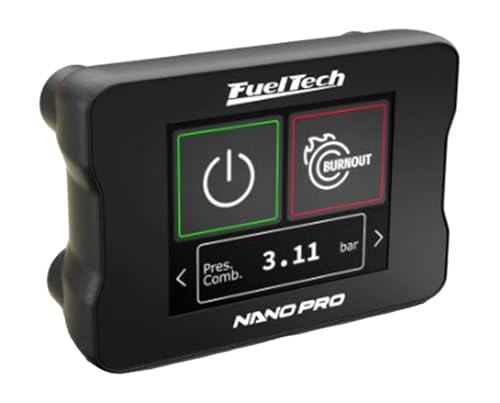
- FuelTech NanoPRO Wideband Oxygen Sensor Display and Conditioner for Bosch LSU, NTK Sensors (Gasoline, E85, Alcohol)
Why Tires and Suspension Matter Just as Much
Adding downforce is only useful if the rest of the car can take advantage of it.
That is why suspension and tires are so important.
A car with poor tires will struggle to generate grip regardless of how much aerodynamic hardware is installed.
Likewise, an improperly configured suspension can make a vehicle unpredictable and reduce the benefits of aerodynamic upgrades.
For a balanced street or track build, enthusiasts may want to consider modifications in stages:
- Tires
- Braking performance
- Suspension
- Cooling
- Aerodynamics
- Additional power
The exact order will depend on the vehicle and the intended use.
A daily driver will have very different requirements from a dedicated track car.
The Difference Between Cosmetic and Functional Mods
There is nothing wrong with modifying a car purely because you like the way it looks.
Car culture has always been about personal expression.
A spoiler does not need to generate downforce to make an owner happy.
But the Porsche Taycan Turbo GT’s Nürburgring performance highlights the difference between cosmetic modifications and genuine engineering.
One changes the appearance.
The other can fundamentally change how the car performs.
The best builds can combine both.
A car can look aggressive and have modifications that serve a real purpose.
Aero Is Becoming More Important
As performance cars become faster, aerodynamics are becoming increasingly important.
Modern supercars and track-focused production vehicles rely heavily on airflow management.
Even electric performance cars are beginning to use increasingly sophisticated aerodynamic systems.
That means the aftermarket is likely to continue expanding beyond traditional modifications such as intakes and exhaust systems.
Expect to see more attention given to:
- Vehicle-specific aero packages
- Adjustable wings
- Functional splitters
- Underbody modifications
- Lightweight materials
- Computational aerodynamic design
But the biggest lesson remains simple.
More parts do not automatically make a car faster.
The Porsche Taycan Turbo GT Manthey Kit works because it was developed as a complete system.
The suspension, aerodynamics, tires, and chassis work together toward the same objective.
For enthusiasts planning their own builds, that may be the best takeaway from Porsche’s Nürburgring achievement.
Don’t just add modifications.
Build a system.
Because when every component works together, even something as simple as changing the way air moves around a car can completely transform its performance.