The Mitsubishi Eclipse is back.
At least, the name is.
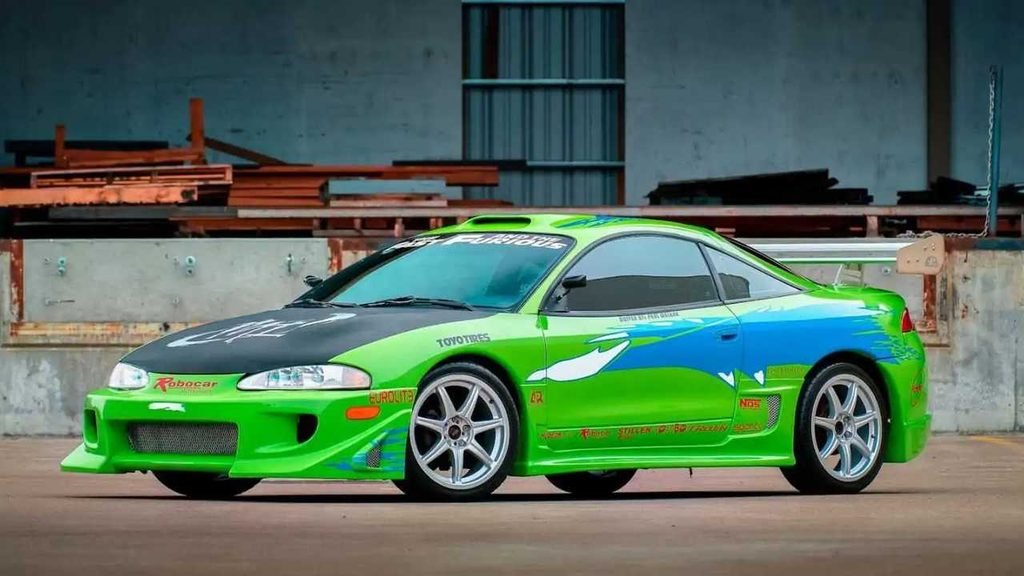
For a generation of car enthusiasts, the Eclipse represents something very different from Mitsubishi’s newest vehicle. The original Eclipse was a sporty two-door coupe that became deeply connected to 1990s and 2000s tuner culture, turbocharged performance, and the golden era of Japanese imports.
The new 2027 Mitsubishi Eclipse Sportback, however, is an all-electric compact crossover.
That decision is likely to divide Mitsubishi fans.
The company has officially confirmed that the Eclipse Sportback will launch in the United States and Canada during the second half of 2026. But instead of reviving the Eclipse as a new performance coupe, Mitsubishi is using the famous name on a battery-electric vehicle supplied by Nissan.
From Turbocharged Coupe to Electric Sportback
The original Mitsubishi Eclipse debuted in 1989 and quickly became one of the most recognizable Japanese sports coupes of its era.
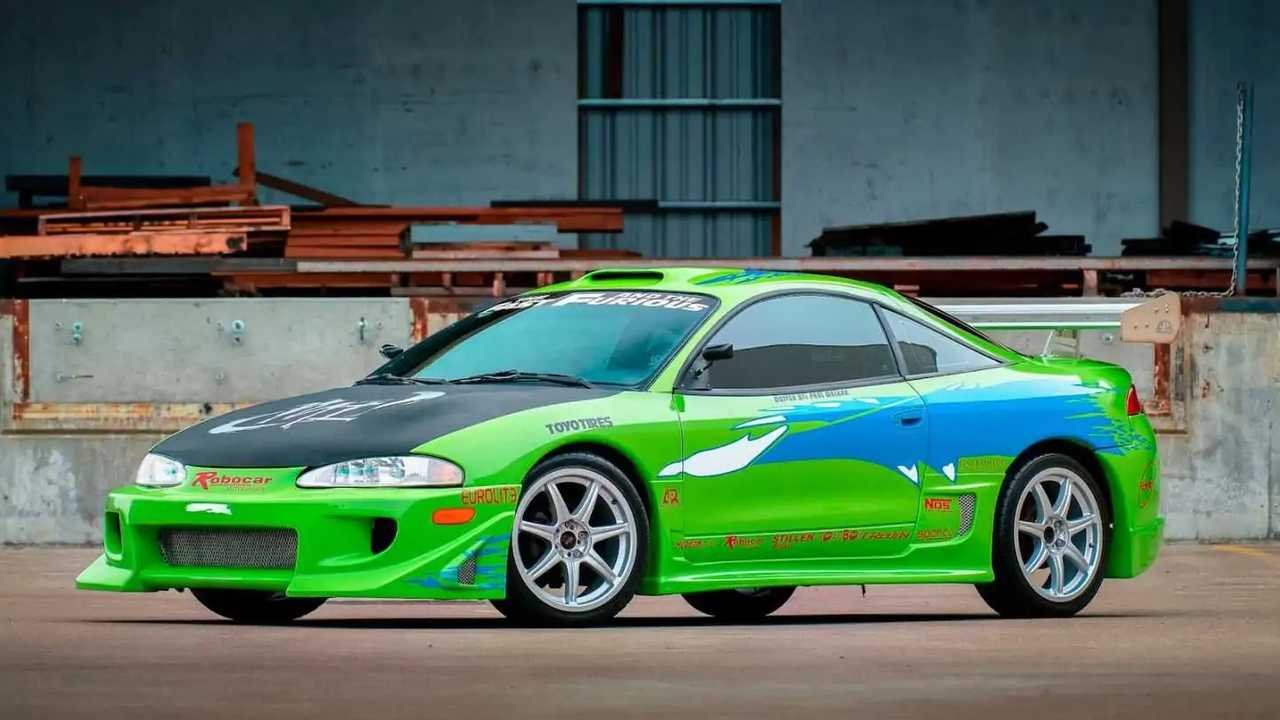
Over its four generations, the Eclipse built a loyal following among enthusiasts. The second-generation GSX, with its turbocharged 4G63 engine and all-wheel-drive system, became particularly popular in the tuning world.
For many JDM fans, the Eclipse represented an era when Japanese manufacturers were building affordable cars with serious modification potential.
That history makes the new Eclipse Sportback a controversial return.
Instead of a turbocharged engine, manual transmission, or performance-focused coupe body, the new model is a front-wheel-drive EV with a 75-kWh battery and a 214-horsepower electric motor. Mitsubishi is targeting an estimated range of around 282 miles, while testing of the mechanically related Nissan Leaf suggests a 0–60 mph time of approximately 6.9 seconds.
Yes, It’s Closely Related to the Nissan Leaf
One of the biggest talking points surrounding the new Eclipse Sportback is its relationship with the redesigned Nissan Leaf.
Mitsubishi has officially confirmed that the vehicle is supplied by Nissan on an OEM basis. The Eclipse Sportback receives Mitsubishi-specific exterior changes, but its underlying engineering is closely related to Nissan’s EV.
From a business perspective, the decision makes sense.
Developing an entirely new electric vehicle platform requires enormous investment. Mitsubishi has openly stated that it plans to use OEM-supplied battery-electric vehicles from Alliance partners while concentrating much of its own development on areas where it believes it has a stronger competitive advantage, including hybrid and plug-in hybrid technology.
For enthusiasts, however, the business case is not necessarily the problem.
The name is.
Why the Eclipse Name Means So Much to JDM Fans
The Eclipse was never in the same category as the Nissan Skyline GT-R or Toyota Supra when it came to exclusivity.
That was part of its appeal.
It was accessible.
It was tunable.
And in its most desirable versions, it had serious performance potential.
The turbocharged, all-wheel-drive Eclipse GSX became a favorite among enthusiasts who wanted a Japanese performance car capable of handling substantial modifications.
The Eclipse also became a major part of popular automotive culture during the tuner boom of the late 1990s and early 2000s.
For many enthusiasts, the name immediately brings back memories of:
- Turbocharged 4G63 engines
- All-wheel-drive launches
- DSM tuning culture
- Aftermarket body kits
- Street racing and import shows
- The early Fast & Furious era
That is why attaching the Eclipse badge to an electric crossover is likely to be difficult for some fans to accept.
The New Eclipse Isn’t Trying to Be a Performance Car
To be fair, Mitsubishi is not pretending that the Eclipse Sportback is the spiritual successor to a turbocharged Eclipse GSX.
The new vehicle has a completely different purpose.
It is designed as a practical electric vehicle for daily driving, with modern connectivity, driver-assistance technology, and usable range.
The Eclipse Sportback is expected to arrive with features including dual 14.3-inch displays, Apple CarPlay, Android Auto, regenerative braking, DC fast charging through a NACS port, and an available Bose audio system. Pricing is expected to fall roughly between $35,000 and $40,000 when sales begin.
On its own, that could make it a perfectly reasonable EV.
The controversy exists because of what is written on the back of it.
The Eclipse Name Has Already Changed Before
This is not the first time Mitsubishi has used the Eclipse name in a form that disappointed traditional enthusiasts.
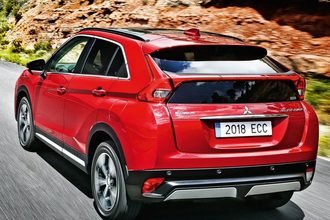
The Eclipse Cross, introduced years after the original coupe disappeared, also transformed the famous name into an SUV.
The latest Eclipse Sportback takes that evolution even further by removing the internal-combustion engine entirely.
Meanwhile, Mitsubishi’s European lineup already includes an all-electric Eclipse Cross, another OEM-based model developed through the company’s Alliance partnerships.
The trend is clear.
For Mitsubishi, Eclipse is now a brand name rather than a description of a specific type of sports car.
A Reminder of What the Eclipse Used to Be
The arrival of the new Eclipse Sportback may actually have an unexpected effect.
It could generate even more interest in the original cars.
Whenever an iconic nameplate returns in a radically different form, enthusiasts often become more nostalgic for the vehicles that created the name’s reputation in the first place.
The second-generation Eclipse, particularly the turbocharged GSX, remains one of the most recognizable cars from the golden era of Japanese tuning.
For enthusiasts who still prefer the original Eclipse era, a detailed Mitsubishi Eclipse model can be a great way to bring a piece of 1990s JDM culture into a garage, office, or collection.
Check out this classic Mitsubishi Eclipse model on Amazon

- Manufacturer: Hot Wheels
- Item Category: Non Riding Toy Vehicle
- Item Trademark: DIECAST
Is Mitsubishi Wasting a Legendary Name?
That depends on who you ask.
From Mitsubishi’s perspective, using a recognizable name on a modern EV could help the company attract attention in an increasingly competitive market.
From the perspective of an old-school enthusiast, however, the Eclipse name represents something much more specific.
A low-slung coupe.
Turbocharged power.
Tuning potential.
And an era when Japanese performance cars were becoming global icons.
The 2027 Eclipse Sportback offers none of those things in the traditional sense.
It is quieter.
More efficient.
More practical.
And significantly more modern.
But for some JDM fans, those qualities may not be enough.
The New Eclipse Is a Sign of How Much the Automotive Industry Has Changed
The transformation of the Eclipse from a turbocharged sports coupe into an electric crossover says a lot about where the automotive industry is heading.
The market that created cars like the Eclipse GSX is very different today.
Manufacturers are dealing with emissions regulations, electrification, changing consumer preferences, and the enormous cost of developing new vehicle platforms.
A small sports coupe may create excitement among enthusiasts.
A practical EV crossover has a better chance of reaching a larger market.
That may be the reality behind Mitsubishi’s decision.
But there is still one question that will follow the new Eclipse Sportback everywhere it goes:
Would this car have generated less controversy if Mitsubishi had simply given it a different name?
For JDM fans, the answer may be obvious.
The Eclipse is back.
It’s just not the Eclipse they were waiting for.