Toyota is preparing to enter a new chapter in motorsport.
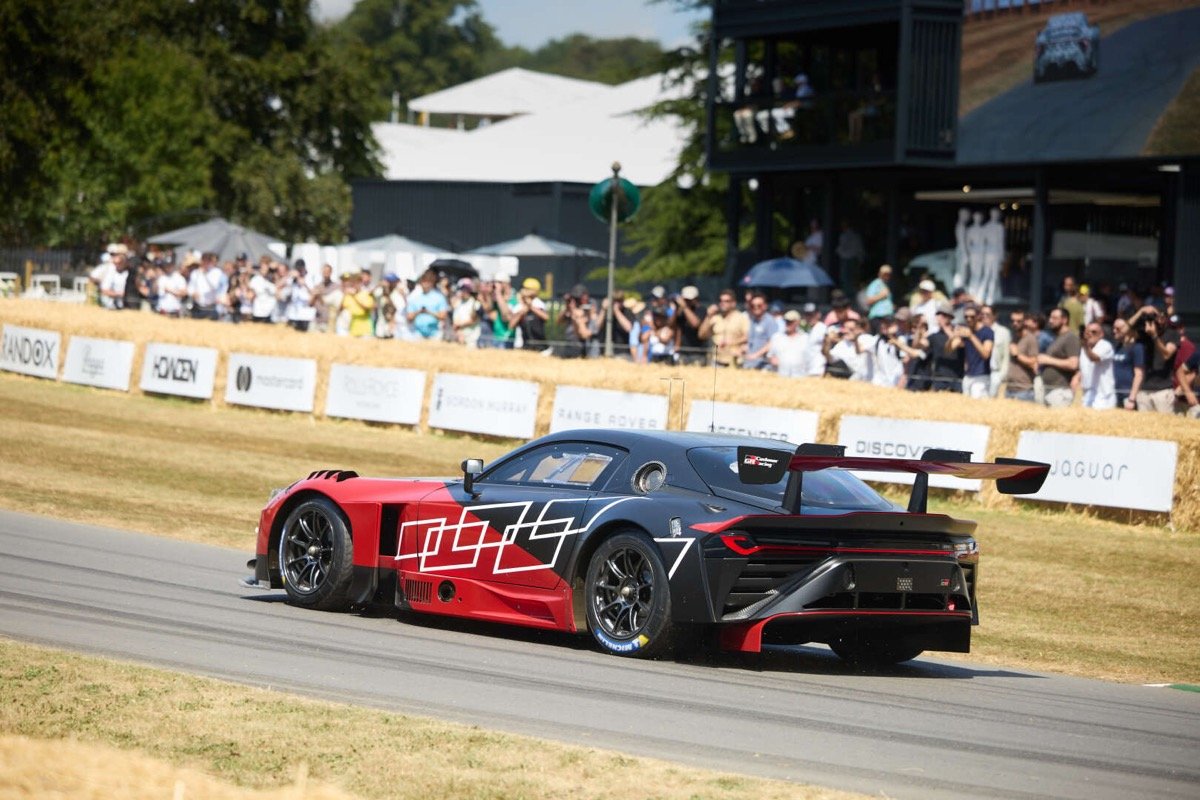
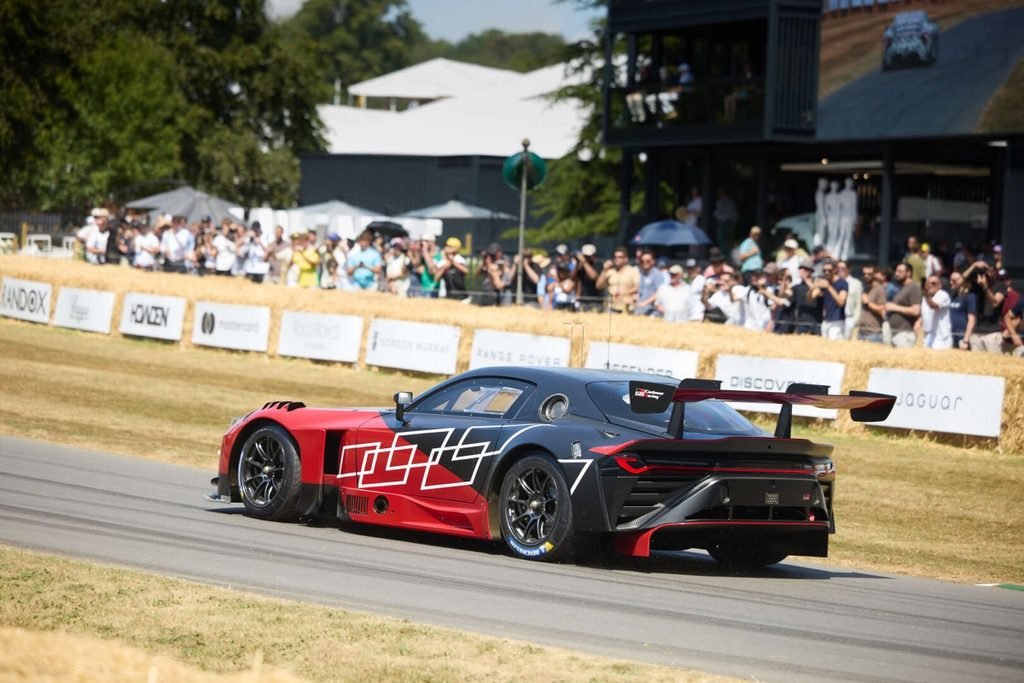
Alongside the upcoming GR GT road car, Toyota Gazoo Racing has revealed the GR GT3, a purpose-built race car designed for competition in one of the world’s most competitive categories of motorsport.
And unlike many race cars that begin life as a heavily modified version of a production vehicle, the GR GT and GR GT3 were developed together.
That could make Toyota’s newest racing project something special.
With a twin-turbocharged V8, rear-wheel drive, and engineering developed around a shared road-and-race platform, the GR GT3 could become one of the most important Japanese GT racing cars of the next generation.
A Road Car and Race Car Developed Together
The connection between the GR GT and GR GT3 is at the center of Toyota’s new project.
Toyota Gazoo Racing has developed the road-going GR GT and its GT3 racing counterpart in parallel, allowing engineers to share technology and development between the two cars.
According to reports from the GR GT’s recent reveal, the two vehicles share approximately 80 percent of their components.
That is a major departure from the traditional approach used by many manufacturers.
Instead of starting with a finished road car and transforming it into a race car, Toyota appears to have designed the basic architecture with both applications in mind.
The result is a road car influenced by motorsport—and a race car with strong connections to its production counterpart. (roadandtrack.com)
A New Twin-Turbo V8 at the Heart of the Project
Both the GR GT road car and the GR GT3 program are built around Toyota’s new performance platform.
The road-going GR GT uses a newly developed 4.0-liter twin-turbocharged V8 combined with hybrid technology. Toyota is targeting more than 641 horsepower and 627 lb-ft of torque for the production version.
The GR GT uses a rear-mounted transaxle, rear-wheel drive, and a target 45:55 front-to-rear weight distribution.
The racing version will naturally feature major differences in power delivery, aerodynamics, suspension, safety equipment, and weight. GT3 regulations are designed to balance performance between competing cars, meaning the final race specification will not simply be a more powerful version of the road car.
But the shared engineering philosophy remains one of the most interesting parts of the project. (media.toyota.co.uk)
Why GT3 Racing Matters So Much
GT3 has become one of the most important categories in global motorsport.
Cars built to GT3 regulations compete in major championships and endurance races around the world. Manufacturers such as Ferrari, Porsche, BMW, Mercedes-AMG, McLaren, Lamborghini, Aston Martin, Ford, and Chevrolet all have GT3 programs.
The category allows manufacturers to build recognizable race cars while maintaining a connection to production vehicles.
That makes GT3 particularly important for brand identity.
When fans watch a Porsche 911 GT3 R or BMW M4 GT3 compete, they can immediately see the relationship between the race car and something available in a showroom.
Toyota’s GR GT3 could create that same connection.
The difference is that Toyota is entering the category with a completely new flagship rather than adapting an existing sports car.
Toyota Is Building on a Serious Motorsport Legacy
Toyota is no stranger to international racing success.
The company has won multiple 24 Hours of Le Mans titles and has become one of the dominant manufacturers in modern endurance racing through its Hypercar program.
Toyota also has a long history in rallying, touring cars, NASCAR, and GT competition.
But the GR GT3 could represent a different kind of opportunity.
GT3 racing is particularly accessible to customers and private teams.
Unlike a factory-only prototype program, GT3 cars can be sold to racing organizations that compete across multiple championships.
That means the GR GT3 could eventually appear on race tracks around the world.
From Europe to North America, Asia, and Australia, a Toyota-built GT3 car could become a familiar part of the global racing scene.
Could the GR GT3 Become Toyota’s Next Motorsport Icon?
Japanese manufacturers have produced some unforgettable GT and endurance racing cars.
The Mazda 787B became a legend after its historic victory at Le Mans.
Nissan created iconic racing machines through programs involving the Skyline GT-R and its endurance prototypes.
Toyota itself has built a reputation through its Le Mans-winning TS050 Hybrid and GR010 Hybrid.
The GR GT3 now has the opportunity to create its own legacy.
Of course, success will depend on much more than the design of the car.
GT3 competition is brutally competitive.
Toyota will face manufacturers with decades of experience building customer racing programs.
The car will need to be fast.
Reliable.
Affordable enough for racing teams to operate.
And competitive across different tracks and racing conditions.
But Toyota Gazoo Racing is not entering the project without experience.
The company has spent years expanding its motorsport operations and using competition to develop both technology and its performance-car brand.
From the Race Track to the Garage
The connection between the GR GT and GR GT3 also represents something enthusiasts have been asking manufacturers to preserve: a genuine relationship between motorsport and road cars.
Modern racing technology can sometimes feel disconnected from the cars people actually drive.
But when a manufacturer develops a road car and race car alongside each other, the relationship becomes much easier to see.
That is part of what makes the GR GT project interesting.
Toyota isn’t simply creating a faster sports car.
It is building an entire performance platform around road and racing applications.
For Toyota and JDM racing fans, a detailed Toyota racing model or GT-inspired die-cast can be a great way to bring a piece of Japanese motorsport culture into a garage, office, or collection.
Check out this Toyota racing model on Amazon

- (C) Tomy
- Does not use batteries
When Will the GR GT3 Start Racing?
Toyota has not yet confirmed every championship where the GR GT3 will compete, but the project is clearly aimed at global GT3 competition.
The GR GT and GR GT3 were officially revealed as part of Toyota Gazoo Racing’s next-generation performance strategy, with development continuing toward their eventual market and racing debuts. (newsroom.toyota.eu)
That means fans will have to wait before seeing exactly how the car performs against established GT3 competitors.
But the potential is difficult to ignore.
Toyota is combining a brand-new V8-powered performance platform with the experience of one of the world’s most successful modern endurance racing organizations.
If the project delivers on its promise, the GR GT3 could become more than just another entry on the GT3 grid.
It could become the next great Japanese racing icon.
A New Era for Japanese GT Racing
For years, Japanese performance enthusiasts have watched European manufacturers dominate much of the global GT racing landscape.
Cars like the Porsche 911 GT3 R, Ferrari 296 GT3, BMW M4 GT3, and Mercedes-AMG GT3 have become familiar sights at major racing events.
Toyota now appears ready to challenge them with something completely new.
The GR GT3 represents more than a new race car.
It represents Toyota’s attempt to connect its road-car ambitions with its global motorsport program.
The Supra became a tuning icon.
The LFA became an engineering legend.
Toyota’s Le Mans prototypes became endurance racing champions.
Now, the GR GT3 has a chance to create a new legacy.
And if Toyota’s latest project performs as well on the track as it looks on paper, JDM fans may soon have another Japanese racing machine to celebrate.